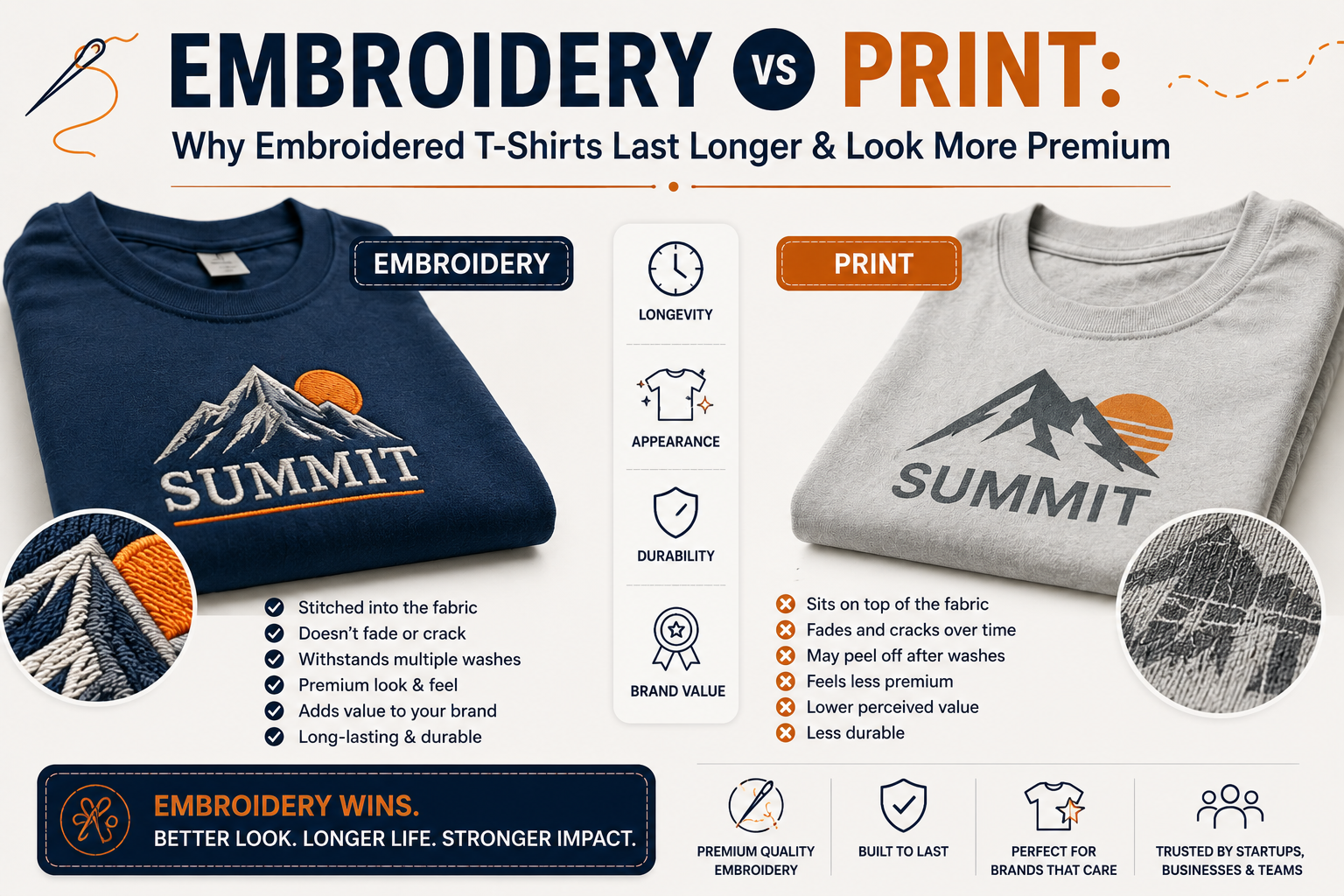
When it comes to customizing t-shirts, one question consistently arises among businesses, startups, schools, event organizers, clothing brands, and individual buyers:
Should you choose embroidery or printing?
Both customization methods have their advantages, but if you’re looking for long-lasting durability, premium branding, and a professional appearance, embroidery often stands out as the superior choice.
As custom apparel continues to grow in popularity across India, understanding the difference between embroidery and printing is essential before investing in uniforms, promotional merchandise, employee apparel, or personalized clothing.
Many customers specifically search for answers to questions such as “embroidery vs print quality” and “does embroidery last longer” before placing bulk orders. The answer depends on factors like usage, fabric type, washing frequency, branding goals, and budget.
In this detailed guide, we’ll compare embroidery and printing side-by-side and explain why embroidered t-shirts often provide better long-term value and a more premium look.
Understanding Embroidery and Printing
Before comparing the two methods, it’s important to understand how each works.
What Is Embroidery?
Embroidery involves stitching a design directly onto the fabric using specialized embroidery machines and high-quality threads.
The process includes:
- Logo digitization
- Thread selection
- Machine stitching
- Quality finishing
The design becomes physically integrated into the garment.
What Is T-Shirt Printing?
Printing applies ink, transfers, or film onto the garment surface.
Common printing methods include:
- Screen Printing
- DTF Printing
- DTG Printing
- Heat Transfer Vinyl
The design sits on top of the fabric rather than becoming part of it.
Embroidery vs Print Quality: Which Looks Better?
One of the biggest differences between embroidery and printing is visual appeal.
Embroidery Creates a Premium Appearance
Embroidery offers:
- Texture
- Dimension
- Professional finish
- Luxury feel
Because thread reflects light differently than ink, embroidered logos often appear more sophisticated.
Businesses frequently choose embroidery because it conveys quality and professionalism.
Printing Offers More Design Flexibility
Printing works exceptionally well for:
- Complex artwork
- Large graphics
- Multi-color illustrations
- Photographic designs
Fashion brands and event organizers often prefer printing for creative freedom.
However, despite its flexibility, printed designs generally don’t create the same premium impression as embroidery.
Does Embroidery Last Longer Than Printing?
This is one of the most searched questions in apparel customization.
The short answer is:
Yes, Embroidery Usually Lasts Longer
When customers ask “does embroidery last longer”, the answer is typically yes because embroidery becomes part of the garment itself.
High-quality embroidery can often outlast the t-shirt it is stitched onto.
Why Embroidery Lasts Longer
Embroidery resists:
- Cracking
- Peeling
- Fading
- Shrinking effects
Because threads are stitched into the fabric, repeated washing has minimal impact on the design.
Printing Has a Limited Lifespan
Even high-quality printing eventually experiences wear.
Common issues include:
- Cracking
- Fading
- Peeling
- Ink deterioration
The lifespan depends on:
- Printing method
- Fabric quality
- Washing habits
- Usage frequency
Wash Test: Embroidery vs Print
Let’s compare how both methods perform after repeated washing.
Embroidery Performance
After 50–100 washes:
✔ Design remains intact
✔ Colors remain vibrant
✔ Minimal wear
✔ Professional appearance maintained
Printing Performance
After 50–100 washes:
✖ Possible fading
✖ Surface cracking
✖ Peeling edges
✖ Reduced vibrancy
Which Is Better for Corporate Uniforms?
For businesses, appearance matters.
Employee uniforms should:
- Look professional
- Last long
- Represent the brand effectively
This is why most companies choose embroidery.
Advantages of Embroidery for Businesses
- Professional appearance
- Strong brand perception
- Better durability
- Long-term cost savings
Which Is Better for Fashion Brands?
The answer depends on the design style.
Choose Embroidery If You Want:
- Minimalist branding
- Premium streetwear
- Luxury fashion
- High-end merchandise
Choose Printing If You Want:
- Large artwork
- Photographic graphics
- Complex illustrations
- Full-front designs
Many successful brands combine both techniques.
Cost Comparison: Embroidery vs Printing
Price often influences the final decision.
Embroidery Costs
Typically higher upfront because of:
- Digitization
- Thread usage
- Machine stitching
Average logo embroidery:
₹50–₹250 per garment
Printing Costs
Generally cheaper for large designs.
Average print cost:
₹30–₹150 per garment
Embroidery vs Print for Small Orders
For single pieces or small batches:
Embroidery
Best for:
- Personalized gifts
- Couple t-shirts
- Corporate samples
- Premium branding
Printing
Best for:
- Artistic designs
- Personal creativity
- Event merchandise
Embroidery vs Print for Bulk Orders
When ordering hundreds of garments:
Embroidery Is Ideal For
- Employee uniforms
- Hospitality staff
- Corporate apparel
- Retail staff uniforms
Printing Is Ideal For
- College festivals
- Marketing campaigns
- Political events
- Promotional giveaways
Environmental Impact Comparison
Sustainability is becoming increasingly important.
Embroidery
Advantages:
- Long-lasting garments
- Reduced replacement frequency
- Less waste over time
Printing
Advantages:
- Lower thread usage
- Fast production
However, designs that deteriorate quickly often lead to more frequent replacements.
Best Use Cases for Embroidery
Embroidery works best for:
✔ Corporate uniforms
✔ Employee apparel
✔ Hospitality staff
✔ Premium merchandise
✔ Startup branding
✔ Polo t-shirts
✔ Luxury fashion
Best Use Cases for Printing
Printing works best for:
✔ Large artwork
✔ Promotional events
✔ College festivals
✔ Fashion graphics
✔ Marketing campaigns
✔ Artistic designs
Embroidery Trends in India for 2025
Several trends are driving embroidery demand.
Minimalist Logos
Small embroidered chest logos are becoming the standard.
Personalized Employee Uniforms
Adding names and departments is increasingly common.
Premium Startup Branding
New businesses are investing in high-quality apparel from day one.
Luxury Streetwear
Fashion brands are using embroidery to create premium collections.
Final Verdict: Embroidery vs Print
When evaluating embroidery vs print quality, both methods have their place in apparel customization.
Printing offers flexibility, vibrant colors, and affordability for large graphics and promotional campaigns. However, if your goal is professionalism, durability, and premium branding, embroidery consistently delivers superior results.
For those asking “does embroidery last longer”, the answer is overwhelmingly yes. Embroidery is stitched directly into the fabric, making it significantly more resistant to fading, peeling, and cracking compared to most printing methods.
Whether you’re ordering uniforms for a startup, branding apparel for a growing business, creating premium merchandise, or investing in long-term corporate wear, embroidered t-shirts provide unmatched durability and a sophisticated appearance that continues to represent your brand effectively for years.
In 2025, businesses, fashion brands, and organizations across India are increasingly choosing embroidery not just because it looks better—but because it offers greater value, stronger brand perception, and a lasting impression that printed apparel often struggles to match.
Leave a Reply