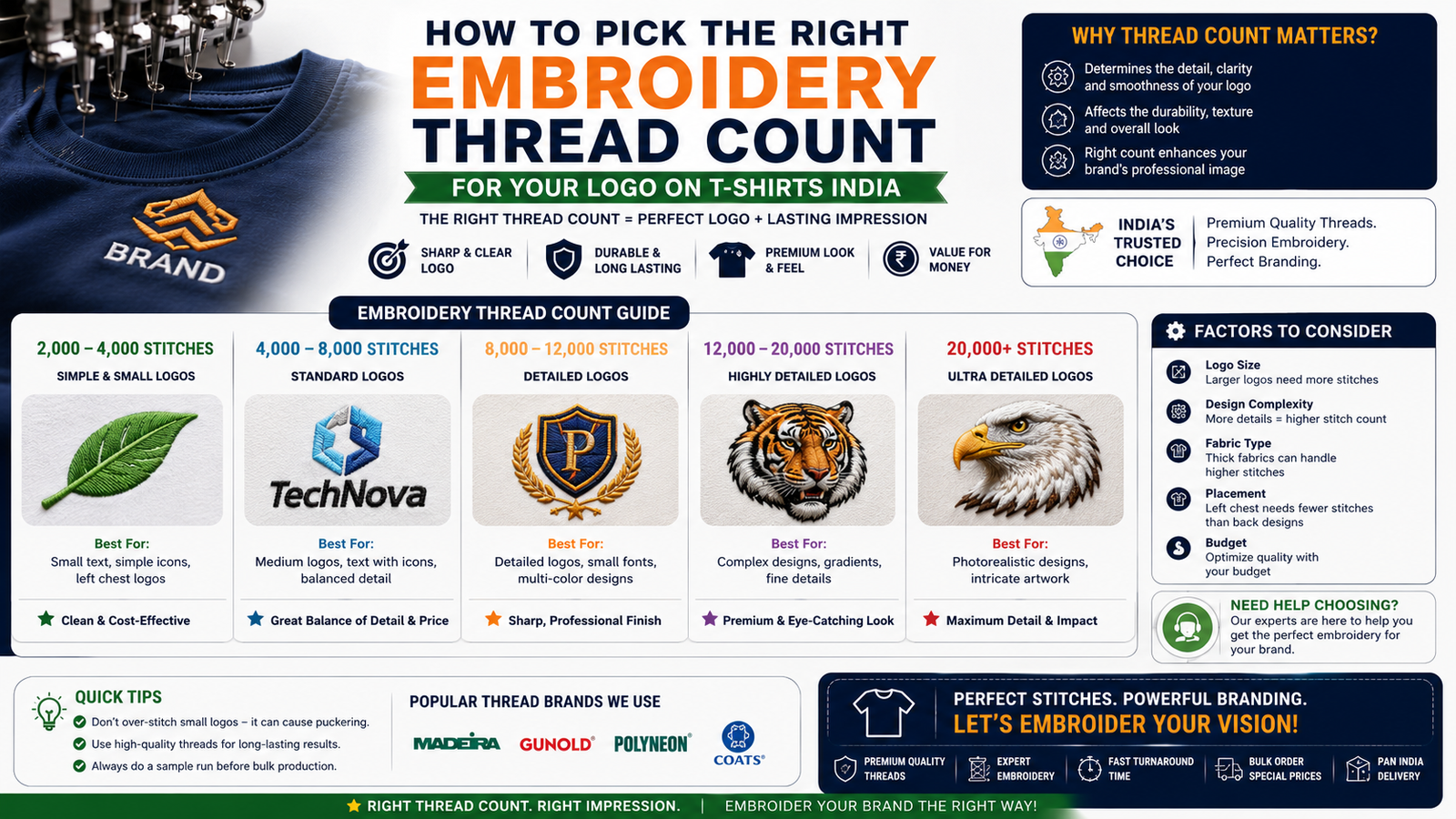
Embroidery has become one of the most popular customization methods for corporate uniforms, startup merchandise, D2C apparel, polo shirts, and premium branded t-shirts. However, many businesses focus on logo design and fabric quality while overlooking one of the most important factors in embroidery quality: thread count, often referred to as stitch count.
Choosing the wrong thread count can result in logos that appear bulky, distorted, uncomfortable, or unnecessarily expensive. On the other hand, selecting the right stitch density creates a professional, durable, and visually appealing embroidered logo.
If you’re searching for guidance on embroidery thread count logo tshirt India, this complete guide will help you understand how thread count affects pricing, appearance, durability, and overall branding success.
What Is Embroidery Thread Count?
In embroidery, thread count generally refers to the number of stitches required to create a design.
Unlike fabric thread count used in bedsheets, embroidery thread count measures:
- Total stitch quantity
- Design complexity
- Embroidery density
- Production time
The higher the stitch count, the more thread is used and the longer the embroidery process takes.
Most embroidery companies in India calculate pricing based on stitch count.
Why Thread Count Matters for Logo Embroidery
Thread count directly affects:
Visual Appearance
A well-balanced stitch count creates sharp, professional logos.
Durability
Proper stitching helps logos withstand repeated washing.
Comfort
Overly dense embroidery can make a t-shirt feel stiff.
Cost
Higher stitch counts increase embroidery pricing.
Businesses investing in <mark>custom logo embroidery India</mark> should understand thread count before approving production.
Understanding Common Stitch Count Ranges
Most logo embroidery projects fall into one of these categories:
| Stitch Count | Design Type |
|---|---|
| 3,000–5,000 | Small Text or Simple Logo |
| 5,000–8,000 | Standard Corporate Logo |
| 8,000–12,000 | Medium Detailed Design |
| 12,000–20,000 | Complex Logo Design |
| 20,000+ | Large Premium Embroidery |
The ideal range depends on logo size, design complexity, and garment type.
Best Stitch Count for Corporate Logos
Corporate logos are typically embroidered on:
- Polo shirts
- Employee uniforms
- Corporate merchandise
- Event apparel
Recommended Range
5,000–8,000 stitches
Benefits:
- Professional appearance
- Affordable production
- Comfortable wear
- Excellent durability
Many companies ordering <mark>corporate embroidered polo shirts India</mark> use logos within this stitch range.
Best Stitch Count for Startup and D2C Brands
Startups often seek premium branding without excessive embroidery costs.
Recommended Range
6,000–10,000 stitches
This range provides:
- Better logo visibility
- Premium finish
- Strong brand perception
Many businesses creating <mark>startup merchandise t-shirts India</mark> find this range ideal.
How Logo Size Affects Thread Count
The size of your logo significantly impacts stitch count.
Small Left-Chest Logo
Size:
- 3–4 inches wide
Typical Count:
- 4,000–8,000 stitches
Medium Logo
Size:
- 4–5 inches wide
Typical Count:
- 8,000–12,000 stitches
Large Embroidered Design
Size:
- 6+ inches wide
Typical Count:
- 12,000–20,000+ stitches
Many brands seeking <mark>embroidered logo t-shirts India</mark> achieve the best results with small chest logos.
Why More Stitches Are Not Always Better
A common misconception is that higher stitch counts automatically create better embroidery.
In reality:
Excessive Stitch Density Can Cause
- Fabric puckering
- Stiff garments
- Increased costs
- Reduced comfort
Professional digitizers focus on optimal density rather than maximum density.
The goal is clean embroidery, not simply adding more stitches.
Choosing the Right Stitch Density
Thread density determines how closely stitches are placed together.
Low Density
Pros:
- Lightweight
- Comfortable
Cons:
- Reduced coverage
High Density
Pros:
- Premium appearance
- Better coverage
Cons:
- Increased fabric tension
Most professional <mark>custom embroidery services India</mark> use balanced densities for optimal results.
Best Fabric GSM for Different Stitch Counts
Fabric weight plays an important role in embroidery quality.
180 GSM Cotton
Best for:
- 3,000–8,000 stitches
Ideal for:
- Corporate uniforms
- Promotional apparel
220 GSM Cotton
Best for:
- 6,000–15,000 stitches
Ideal for:
- Premium branding
- Startup merchandise
240 GSM Cotton
Best for:
- 10,000+ stitches
Ideal for:
- Luxury apparel
- Streetwear collections
Many brands investing in <mark>220 GSM embroidered t-shirts India</mark> find it offers the perfect balance of comfort and stitch support.
Thread Types Used in T-Shirt Embroidery
Different thread materials affect appearance and durability.
Polyester Thread
Most common option.
Benefits:
- Fade resistant
- Strong durability
- Cost-effective
Rayon Thread
Benefits:
- High shine
- Luxury appearance
Often used in premium apparel.
Cotton Thread
Benefits:
- Natural appearance
- Soft finish
Less commonly used for corporate branding.
Many suppliers offering <mark>premium embroidery t-shirts India</mark> prefer polyester due to its durability.
Embroidery Placement and Stitch Count
Placement affects both appearance and thread requirements.
Left Chest Logo
Most common.
Recommended:
- 5,000–8,000 stitches
Sleeve Logo
Recommended:
- 3,000–6,000 stitches
Back Neck Logo
Recommended:
- 2,000–5,000 stitches
Full Back Embroidery
Recommended:
- 12,000–20,000+ stitches
However, full-back embroidery is uncommon due to cost and comfort considerations.
How Stitch Count Impacts Pricing in India
Embroidery pricing is often calculated based on:
- Stitch count
- Number of colors
- Logo size
- Garment quantity
Typical Pricing Structure
| Stitch Count | Additional Cost Per Piece |
|---|---|
| 3,000–5,000 | ₹20–₹50 |
| 5,000–8,000 | ₹40–₹80 |
| 8,000–12,000 | ₹70–₹150 |
| 12,000–20,000 | ₹150–₹300+ |
Many businesses searching for <mark>custom embroidery pricing India</mark> discover that simplifying logo designs can significantly reduce costs.
Common Logo Design Mistakes
Extremely Small Text
Tiny lettering often loses clarity during embroidery.
Excessive Detail
Complex artwork may not translate well into stitches.
Thin Lines
Very fine elements can disappear during production.
Large Solid Areas
These increase stitch count and may cause puckering.
The best embroidery logos are usually simple, bold, and scalable.
Tips for Getting the Best Embroidery Results
Simplify Your Logo
Clean designs embroider better.
Use High-Resolution Artwork
Vector files provide the best results.
Choose Appropriate Fabric
220 GSM cotton is often ideal.
Request a Stitch Preview
Always approve a digital embroidery proof before production.
Work With Experienced Digitizers
Professional digitization has a major impact on final quality.
Ideal Thread Count Recommendations
Corporate Uniforms
5,000–8,000 stitches
Startup Merchandise
6,000–10,000 stitches
Fashion Brands
8,000–12,000 stitches
Premium Streetwear
10,000–15,000 stitches
Luxury Collections
12,000–20,000 stitches
These ranges provide excellent branding while maintaining comfort and durability.
Final Verdict: Embroidery Thread Count Logo TShirt India
Choosing the right embroidery thread count logo tshirt India is about finding the perfect balance between appearance, durability, comfort, and cost.
For most businesses, startups, and D2C brands, a logo embroidery range of 5,000 to 8,000 stitches delivers the best value. It provides a clean, professional appearance without adding unnecessary weight or production costs.
If you’re creating premium merchandise or fashion apparel, moving into the 8,000–12,000 stitch range can enhance brand perception and create a more luxurious finish.
Remember that successful embroidery isn’t about using the highest stitch count possible—it’s about using the right stitch count for your logo, fabric, and branding goals. When combined with quality cotton fabric and professional digitization, the correct thread count will help your custom t-shirts look premium, last longer, and represent your brand at its best.
Leave a Reply