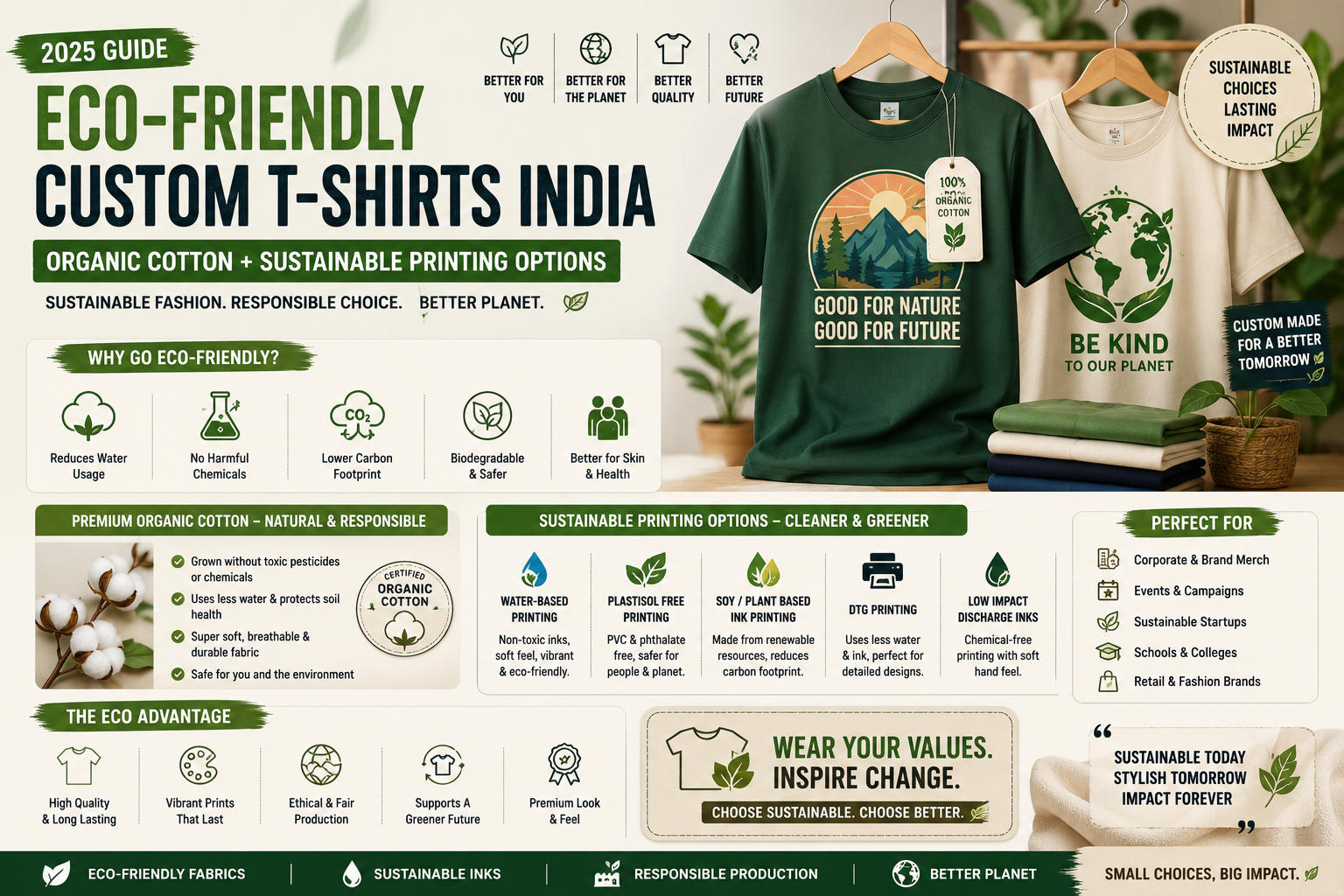
Sustainability is no longer just a trend—it’s becoming an important part of how businesses and consumers choose clothing. Across India, startups, corporate organizations, educational institutions, NGOs, hospitality brands, and D2C companies are increasingly looking for eco-friendly custom t-shirts that combine premium quality with lower environmental impact.
Whether you’re creating employee uniforms, promotional merchandise, event apparel, or launching your own clothing brand, choosing sustainable fabrics and responsible customization methods can help reduce waste while strengthening your brand image.
If you’re searching for eco friendly custom tshirt India organic cotton, this comprehensive guide explains everything you need to know about organic cotton, recycled fabrics, eco-friendly printing, sustainable embroidery, certifications, and how to choose environmentally responsible custom apparel in 2025.
Why Sustainable Custom T-Shirts Are Growing in India
Indian businesses are becoming more environmentally conscious due to changing customer expectations and corporate sustainability goals.
Eco-friendly apparel helps organizations:
- Reduce environmental impact
- Support responsible sourcing
- Strengthen ESG initiatives
- Improve brand reputation
- Appeal to environmentally conscious customers
- Create long-lasting premium merchandise
Many companies now include <mark>sustainable corporate merchandise India</mark> as part of their branding and employee engagement strategies.
What Makes a T-Shirt Eco-Friendly?
A truly sustainable custom t-shirt considers the entire production process—not just the fabric.
Key factors include:
- Organic or responsibly sourced cotton
- Lower water consumption
- Reduced chemical usage
- Durable construction
- Responsible printing methods
- Sustainable packaging
- Ethical manufacturing practices
The longer a garment lasts, the lower its environmental impact over time.
Organic Cotton vs Regular Cotton
One of the biggest differences lies in how the cotton is grown.
| Feature | Organic Cotton | Conventional Cotton |
|---|---|---|
| Synthetic Pesticides | Avoided | Commonly Used |
| Chemical Fertilisers | Avoided | Commonly Used |
| Soil Health | Better Supported | Can Be Degraded |
| Farmer Safety | Improved | Greater Chemical Exposure |
| Environmental Impact | Generally Lower | Typically Higher |
Organic cotton is grown using farming methods designed to reduce reliance on synthetic agricultural chemicals while promoting healthier soil and biodiversity.
Many brands looking for <mark>organic cotton t-shirts India</mark> choose certified suppliers to support responsible sourcing.
Benefits of Organic Cotton Custom T-Shirts
Organic cotton offers several advantages.
Softer Feel
Premium organic cotton is often softer because fibres are processed with fewer harsh chemicals.
Comfortable for Everyday Wear
Breathable fabrics make organic cotton suitable for office uniforms, promotional apparel, and casual clothing.
Better for Sensitive Skin
Many people with sensitive skin prefer organic cotton because fewer chemical residues are used during cultivation and processing.
Long-Term Durability
High-quality organic cotton performs well when combined with proper stitching and responsible garment construction.
Recycled Fabric Options
Many apparel manufacturers also offer recycled materials.
Common choices include:
- Recycled cotton blends
- Recycled polyester
- Cotton-polyester recycled blends
These fabrics help reduce textile waste by giving existing materials a second life.
Best Sustainable Printing Methods
Choosing an eco-friendly garment is only part of the process.
The decoration method also matters.
Water-Based Printing
Water-based inks soak into the fabric instead of forming a thick surface layer.
Advantages include:
- Softer finish
- Reduced heavy chemical content compared with some traditional plastisol inks
- Comfortable feel
DTF Printing
Modern DTF (Direct-to-Film) printing provides:
- High-quality colour reproduction
- Low minimum order quantities
- Reduced overproduction through on-demand manufacturing
While DTF is not inherently the most sustainable printing method, it can help reduce waste when used for short production runs because only the required quantity is produced.
Screen Printing
For large bulk orders, screen printing can be efficient when:
- Water-based inks are used
- Screens are reused responsibly
- Production waste is minimized
Why Embroidery Can Be a Sustainable Choice
Embroidery creates long-lasting branding without applying a printed layer to the garment.
Benefits include:
- Excellent durability
- Reduced fading
- Premium appearance
- Long garment life
Because embroidered logos often remain intact for years, businesses ordering <mark>custom embroidered t-shirts India</mark> may extend the usable life of their uniforms and merchandise.
Sustainable Packaging Matters Too
Environmentally conscious brands increasingly choose:
- Recyclable paper packaging
- Kraft paper mailers
- Compostable bags
- Plastic-free packaging
- Minimal packaging designs
Reducing unnecessary packaging complements sustainable apparel choices.
Best Fabrics for Eco-Friendly Custom T-Shirts
| Fabric | Best Use |
|---|---|
| Organic Cotton (180 GSM) | Everyday corporate wear |
| Organic Cotton (220 GSM) | Premium merchandise |
| Recycled Cotton Blend | Promotional apparel |
| Organic Cotton Polo | Corporate uniforms |
| Organic Cotton Oversized T-Shirts | Fashion brands |
Many businesses searching for <mark>eco-friendly t-shirts India</mark> prefer 180–220 GSM organic cotton because it combines comfort, durability, and a premium feel.
Industries Choosing Sustainable Apparel
Eco-friendly custom t-shirts are becoming popular across:
- Technology companies
- Startups
- Educational institutions
- NGOs
- Hospitality brands
- Retail businesses
- Wellness brands
- Fitness companies
- D2C brands
- Corporate organizations
Sustainable uniforms often support broader environmental and social responsibility initiatives.
Certifications to Look For
When sourcing eco-friendly apparel, ask suppliers whether their fabrics or manufacturing processes are certified.
Common certifications include:
GOTS (Global Organic Textile Standard)
One of the leading certifications for organic textiles, covering environmental and social criteria across the supply chain.
OEKO-TEX® STANDARD 100
Tests finished textile products for harmful substances, helping ensure they meet strict human health safety requirements.
Global Recycled Standard (GRS)
Verifies recycled material content and sets requirements for responsible processing and social practices.
Choosing certified products provides greater confidence in sustainability claims.
Tips for Businesses Ordering Sustainable Apparel
To maximise the environmental benefits:
- Choose durable fabrics that last longer.
- Order only the quantities you need.
- Select timeless designs that remain wearable.
- Use minimalist branding.
- Reorder through print-on-demand when appropriate.
- Encourage employees to care for garments properly.
Long-lasting apparel generally has a lower environmental footprint than garments replaced frequently.
Common Mistakes to Avoid
Avoid these common issues:
- Assuming every “green” claim is verified
- Ignoring certifications
- Choosing very low-quality garments
- Overordering unnecessary inventory
- Using excessive packaging
- Prioritising price over durability
Always ask suppliers about the materials, certifications, and production methods they use.
Future Trends in Sustainable Custom Apparel
The Indian custom apparel industry is moving toward:
- Organic cotton collections
- Recycled fabric innovations
- Water-based inks
- Carbon-conscious production
- Print-on-demand manufacturing
- Plastic-free packaging
- Circular fashion initiatives
- Minimalist embroidery
As sustainability expectations continue to grow, responsible apparel choices are likely to become even more important for brands.
Frequently Asked Questions (FAQs)
Are organic cotton t-shirts better than regular cotton?
Organic cotton is produced using farming methods that avoid synthetic pesticides and fertilisers, supporting healthier soil and reducing certain environmental impacts. It also offers excellent comfort and durability when manufactured to high quality standards.
Which GSM is best for eco-friendly custom t-shirts?
180–220 GSM organic cotton is a popular choice because it provides a premium feel, long-lasting durability, and everyday comfort.
Is embroidery more sustainable than printing?
Embroidery can be a sustainable option because it is highly durable and often extends the usable life of branded garments. The overall environmental impact still depends on thread materials, garment quality, and manufacturing practices.
What certifications should I look for?
Look for recognised certifications such as GOTS, OEKO-TEX® STANDARD 100, and Global Recycled Standard (GRS) when applicable.
Can startups order eco-friendly custom t-shirts in small quantities?
Yes. Many suppliers now offer low minimum order quantities or print-on-demand services, making sustainable apparel accessible for startups and small businesses.
Final Verdict: Eco Friendly Custom TShirt India Organic Cotton
Choosing an eco friendly custom tshirt India organic cotton solution is about more than selecting a different fabric—it’s about making thoughtful decisions throughout the product’s lifecycle. From responsibly sourced organic cotton and recycled materials to durable embroidery, water-based printing, and recyclable packaging, every choice contributes to a more sustainable custom apparel strategy.
For most businesses, 180–220 GSM certified organic cotton, paired with high-quality customization and responsible production practices, offers the best balance of comfort, durability, and environmental responsibility. Whether you’re creating employee uniforms, promotional merchandise, event apparel, or launching an eco-conscious clothing brand, investing in well-made garments that people will wear for years delivers value for both your brand and the environment.
As sustainability becomes a defining factor in purchasing decisions across India, organizations that prioritize quality, transparency, and responsible sourcing will be well-positioned to build stronger customer trust while reducing their environmental footprint.
Leave a Reply