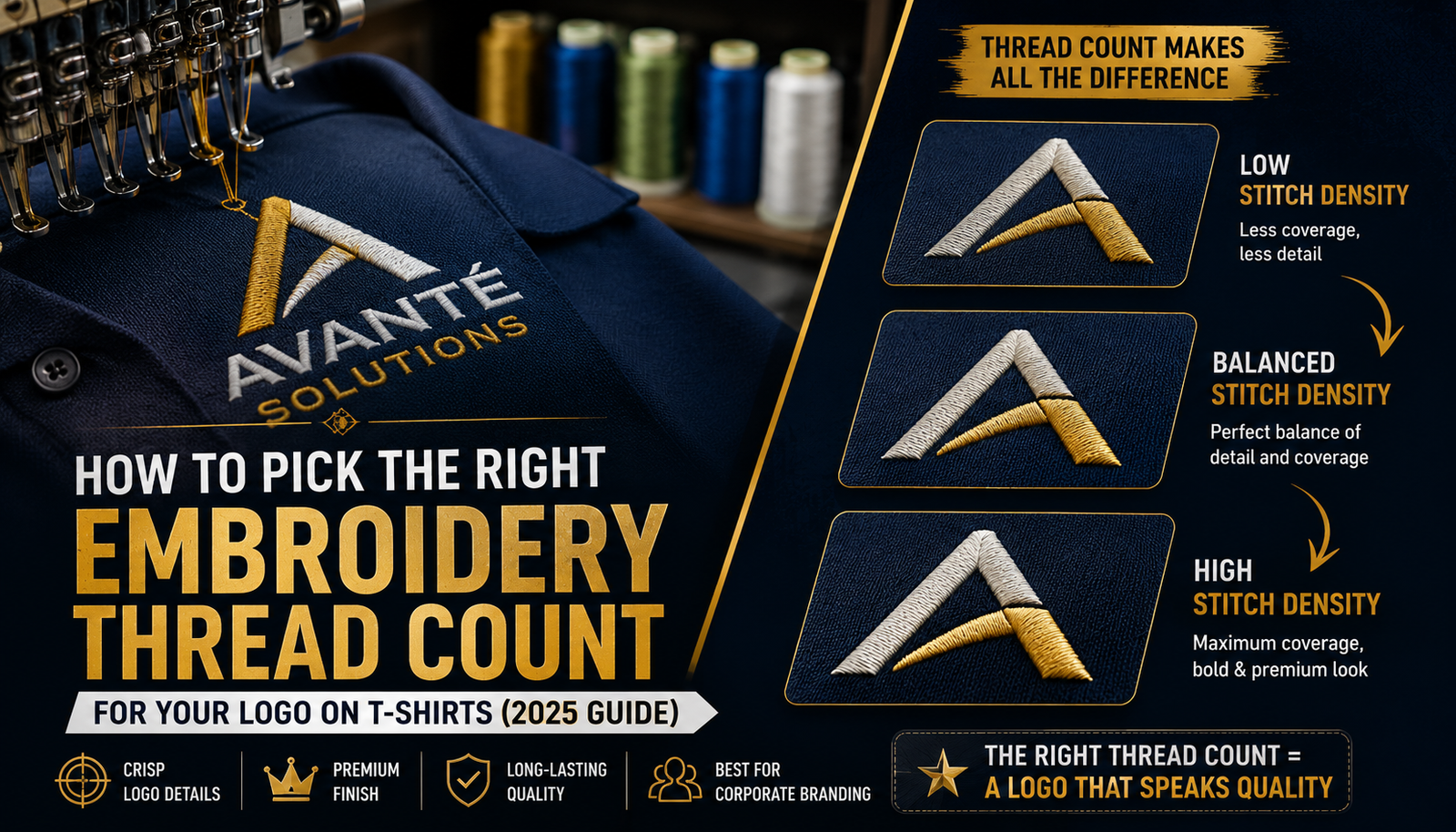
Custom embroidered t-shirts are one of the most professional and durable branding solutions for businesses, startups, schools, colleges, sports teams, hospitality brands, and corporate organizations. While most buyers focus on the logo design and fabric quality, one important factor is often overlooked—embroidery thread count, also known as stitch count.
The thread count determines how many stitches are required to recreate your logo on the fabric. It directly affects the appearance, durability, production time, and overall cost of embroidery. A logo with too few stitches may look incomplete, while an unnecessarily high stitch count can increase costs and make the garment feel heavy.
If you’re searching for embroidery thread count logo tshirt India, this complete guide explains everything you need to know about stitch count, logo sizing, thread types, fabric compatibility, pricing, and best practices for creating premium embroidered t-shirts in 2025.
What Is Embroidery Thread Count?
In machine embroidery, thread count generally refers to the total number of stitches used to create a logo or design—not the thickness of the thread itself.
The stitch count depends on factors such as:
- Logo size
- Design complexity
- Lettering
- Number of colours
- Fill areas
- Outline details
- Stitch density
A simple logo may require only a few thousand stitches, while a detailed emblem can require tens of thousands.
Why Thread Count Matters
The right stitch count helps achieve:
- Clean logo definition
- Professional appearance
- Long-lasting durability
- Comfortable wear
- Better fabric performance
- Cost-efficient production
Using the correct stitch count ensures the logo looks sharp without adding unnecessary weight or stiffness.
Typical Stitch Count by Logo Size
The values below are general industry estimates. Actual stitch counts vary depending on the logo’s shape, density, lettering, and digitization.
| Logo Size | Approximate Stitch Count |
|---|---|
| Small Left Chest Logo | 5,000–8,000 stitches |
| Medium Logo | 8,000–12,000 stitches |
| Large Chest Logo | 12,000–20,000 stitches |
| Large Back Design | 20,000–40,000+ stitches |
A skilled digitizer will determine the optimal stitch count based on the artwork rather than simply increasing the number of stitches.
What Affects Stitch Count?
1. Logo Complexity
A simple icon uses fewer stitches than a detailed illustration.
Low Stitch Count
- Text logos
- Lettermarks
- Monograms
- Minimal icons
High Stitch Count
- Detailed illustrations
- Mascots
- Badges
- Complex crests
- Multi-layered graphics
Keeping a logo clean and uncluttered often produces better embroidery.
2. Logo Size
Larger logos naturally require more stitches.
For example:
- A 3-inch chest logo may require around 6,000–8,000 stitches.
- A larger back logo could require three to five times more, depending on the design.
Oversized embroidery should be planned carefully to maintain comfort.
3. Stitch Density
Stitch density determines how closely the stitches are placed together.
Lower Density
- Lighter embroidery
- More flexible fabric
- Faster production
Higher Density
- Richer appearance
- Better coverage
- Increased thread usage
- Higher production cost
Excessive density can make the logo stiff and may affect fabric drape.
4. Number of Thread Colours
Each additional colour usually requires:
- Machine stops
- Thread changes
- Additional production time
Using fewer colours can simplify production and reduce costs while maintaining a clean brand identity.
Best Thread Types for Custom T-Shirts
Choosing the right embroidery thread is just as important as stitch count.
Polyester Thread
Most commonly used for custom t-shirts because it offers:
- High durability
- Fade resistance
- Strong colour retention
- Good wash performance
Ideal for:
- Corporate uniforms
- Sports apparel
- Hospitality
- Daily wear
Rayon Thread
Rayon is valued for its smooth, glossy finish.
Best For
- Premium fashion
- Luxury branding
- Retail merchandise
Consideration
It may require more careful handling than polyester in demanding environments.
Cotton Thread
Cotton thread is occasionally selected for vintage or natural-looking designs.
It is less common for everyday corporate apparel but may suit specific aesthetic preferences.
Best Logo Size for T-Shirts
The logo should remain clear without overpowering the garment.
| Placement | Recommended Size |
|---|---|
| Left Chest | Approximately 7–10 cm (3–4 inches) wide |
| Sleeve | Approximately 5–7 cm (2–3 inches) wide |
| Back Neck | Approximately 5–8 cm (2–3 inches) wide |
| Full Back | Varies depending on the artwork and garment |
Well-proportioned logos generally produce better embroidery results than oversized designs.
Best Fabric for Embroidery
Fabric stability influences stitch quality.
| Fabric | Embroidery Performance |
|---|---|
| 180 GSM Biowash Cotton | ⭐⭐⭐⭐⭐ |
| 200 GSM Cotton | ⭐⭐⭐⭐⭐ |
| 220 GSM Cotton | ⭐⭐⭐⭐⭐ |
| 240 GSM Cotton | ⭐⭐⭐⭐⭐ |
| Polyester | ⭐⭐⭐⭐☆ |
Many businesses searching for <mark>best GSM cotton tshirt India custom</mark> prefer 180–220 GSM cotton because it balances comfort, durability, and embroidery performance.
How Stitch Count Affects Cost
Embroidery pricing often depends on:
- Total stitch count
- Logo size
- Number of thread colours
- Fabric type
- Order quantity
- Digitization requirements
In general:
- Lower stitch counts cost less.
- Higher stitch counts require more thread, more machine time, and therefore higher production costs.
Requesting a quotation based on your actual logo is the most accurate way to estimate embroidery costs.
Common Embroidery Mistakes
Avoid these frequent errors:
- Using low-resolution logo files.
- Making text too small to stitch clearly.
- Overcomplicating the artwork.
- Increasing stitch density unnecessarily.
- Choosing poor colour contrast.
- Skipping sample approval.
Professional digitization is often more important than simply increasing the stitch count.
Which Industries Benefit Most from Embroidery?
High-quality embroidered t-shirts are popular with:
- Startups
- IT companies
- Hotels
- Restaurants
- Retail chains
- Healthcare providers
- Manufacturing businesses
- Educational institutions
- Sports clubs
- Corporate offices
Embroidery provides a durable, premium finish suitable for long-term uniforms and branded apparel.
Tips for Better Embroidery Results
To achieve the best outcome:
- Provide vector artwork (AI, EPS, SVG, or high-resolution PDF when possible).
- Keep the logo simple and readable.
- Use high-quality embroidery thread.
- Match thread colours to your brand guidelines.
- Choose 180–220 GSM cotton for most applications.
- Approve a stitched sample before bulk production.
Attention to these details helps ensure a clean, professional finish.
Trends in Embroidery for 2025
Current trends include:
- Minimalist logo embroidery
- Tone-on-tone thread colours
- Matte finish embroidery
- Heavyweight cotton garments
- Organic cotton apparel
- Personalized employee names
- Hybrid embroidery and print designs
- Sustainable production methods
Brands are increasingly favouring subtle, premium embroidery over oversized graphics.
Frequently Asked Questions (FAQs)
What is embroidery thread count?
Embroidery thread count, often called stitch count, is the total number of stitches used to create an embroidered logo. It influences the appearance, production time, and cost of the finished design.
Does a higher stitch count mean better quality?
Not necessarily. The ideal stitch count depends on the logo’s design and fabric. Too many stitches can make the embroidery stiff without improving its appearance.
Which thread is best for embroidered t-shirts?
Polyester embroidery thread is the most popular choice because it offers excellent durability, colour retention, and wash resistance. Rayon thread is often selected for a more luxurious sheen.
Which fabric is best for embroidery?
180 GSM and 220 GSM cotton are among the best choices because they provide a stable surface while remaining comfortable for everyday wear.
Why does embroidery cost vary between logos?
Embroidery pricing depends on factors such as stitch count, logo size, complexity, number of thread colours, garment type, and order quantity.
Final Verdict: Embroidery Thread Count Logo TShirt India
Choosing the right embroidery thread count logo tshirt India is about finding the ideal balance between appearance, durability, comfort, and cost. More stitches do not automatically mean better embroidery—in fact, excessive stitch density can increase costs and reduce garment comfort without improving quality.
For most businesses, startups, schools, and corporate teams, a simple left-chest logo with a professionally digitized stitch count on a 180–220 GSM cotton t-shirt delivers the best overall results. Pairing high-quality polyester thread with clean artwork and experienced digitization ensures your logo remains sharp, durable, and professional even after repeated washing.
By focusing on logo simplicity, proper stitch density, premium thread, and quality fabric rather than chasing the highest stitch count, you’ll create custom embroidered t-shirts that strengthen your brand image, last longer, and provide outstanding value for years to come.
Leave a Reply