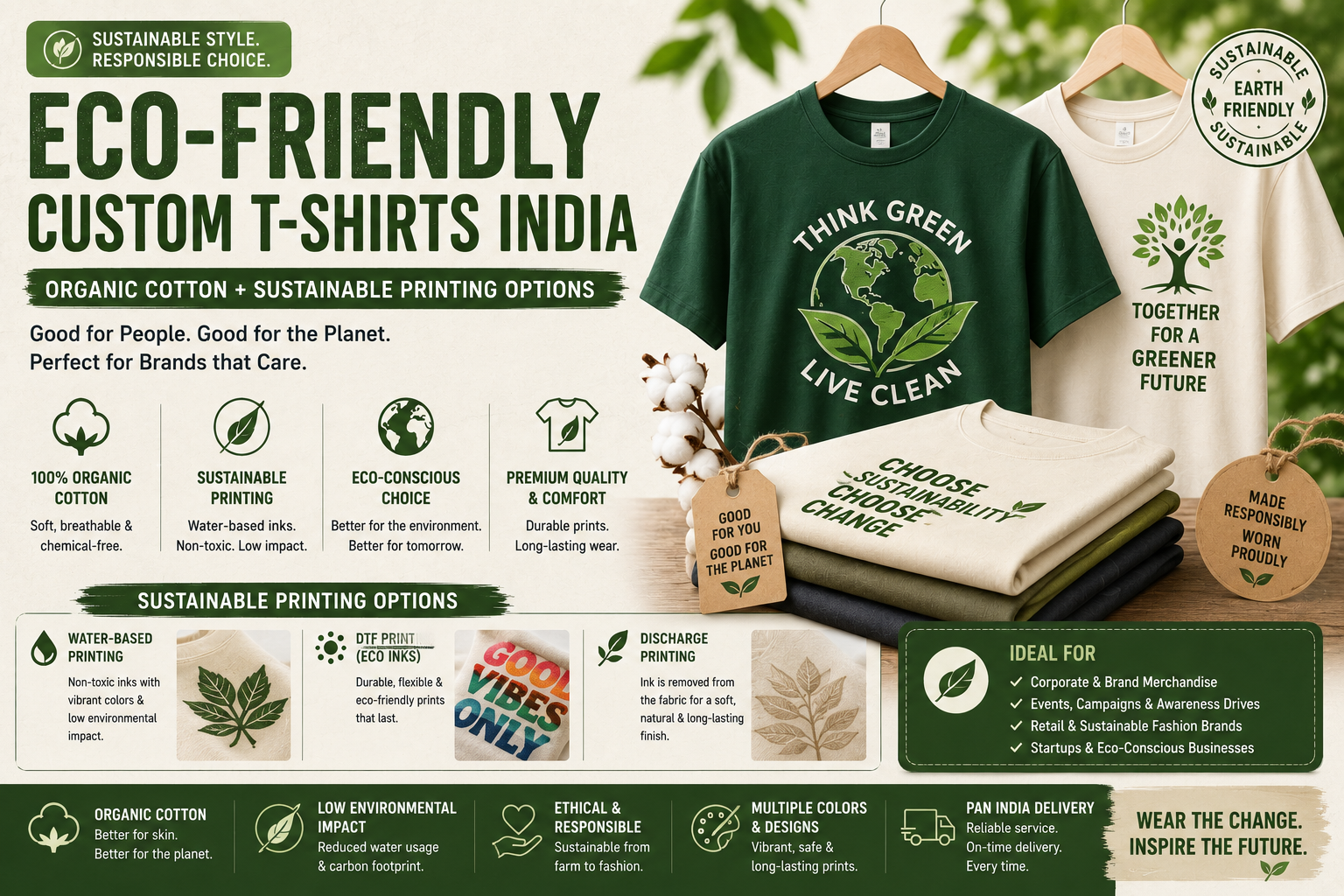
Sustainability is no longer just a trend—it’s becoming a key purchasing factor for businesses and consumers alike. Whether you’re ordering branded uniforms, promotional merchandise, startup apparel, event T-shirts, or retail collections, choosing eco-friendly custom T-shirts helps reduce environmental impact while strengthening your brand image.
India has become one of the world’s largest producers of organic cotton, making it an ideal destination for businesses looking to source sustainable custom apparel. Today, many manufacturers offer organic cotton fabrics, water-based printing, eco-friendly embroidery, and recyclable packaging to meet the growing demand for responsible fashion.
If you’re searching for eco friendly custom tshirt India organic cotton, this guide explains everything you need to know—from fabrics and printing methods to certifications, pricing, and how to choose the right supplier.
Quick Answer
Eco-friendly custom T-shirts in India are typically made using certified organic cotton or recycled fabrics and customized with sustainable methods such as water-based screen printing, low-impact digital printing, or premium embroidery. Choosing eco-friendly materials, ethical manufacturing, and recyclable packaging helps reduce environmental impact while delivering high-quality branded apparel.
Why Businesses Are Choosing Sustainable Custom T-Shirts
Consumers increasingly prefer brands that demonstrate environmental responsibility.
Eco-friendly custom apparel helps businesses:
- Reduce environmental impact
- Support ethical manufacturing
- Improve brand reputation
- Appeal to environmentally conscious customers
- Meet ESG (Environmental, Social, and Governance) goals
- Differentiate from competitors
For startups and established companies alike, sustainable merchandise is becoming a valuable branding tool.
What Makes a Custom T-Shirt Eco-Friendly?
A truly sustainable custom T-shirt considers the entire production process—not just the fabric.
Key elements include:
- Organic or recycled materials
- Environmentally responsible dyeing
- Sustainable printing or embroidery
- Ethical manufacturing practices
- Durable construction
- Minimal or recyclable packaging
The more of these elements a supplier offers, the lower the environmental footprint.
Organic Cotton: The Foundation of Sustainable Apparel
Organic cotton is grown without synthetic pesticides, herbicides, or genetically modified seeds.
Compared with conventional cotton, organic farming generally aims to:
- Improve soil health
- Reduce chemical use
- Support biodiversity
- Protect farm workers
- Promote responsible water management
For businesses seeking premium sustainable apparel, organic cotton is often the preferred choice.
Benefits of Organic Cotton Custom T-Shirts
Better for the Environment
Organic farming methods typically reduce reliance on harmful chemicals.
Comfortable to Wear
Organic cotton is known for its:
- Soft feel
- Breathability
- Moisture absorption
Ideal for daily wear, uniforms, and promotional clothing.
Durable and Long-Lasting
High-quality organic cotton maintains its shape and comfort with proper care.
Longer-lasting garments also reduce textile waste.
Supports Sustainable Branding
Customers increasingly value environmentally responsible products.
Offering sustainable merchandise can reinforce your company’s commitment to responsible business practices.
Popular Organic Cotton GSM Options
Choosing the right GSM (grams per square meter) depends on your intended use.
| GSM | Best For |
|---|---|
| 160 GSM | Promotional giveaways |
| 180 GSM | Everyday branded T-shirts |
| 200 GSM | Premium corporate apparel |
| 220 GSM | Fashion brands |
| 240 GSM | Luxury heavyweight collections |
For most businesses, 180–200 GSM organic cotton provides an excellent balance of comfort, durability, and value.
Sustainable Printing Options
The customization method also affects environmental impact
1. Water-Based Screen Printing
Water-based inks contain fewer harsh chemicals than many traditional plastisol inks.
Advantages
- Soft finish
- Breathable print
- Lower chemical impact
- Comfortable for everyday wear
Suitable for:
- Startup merchandise
- Event T-shirts
- Corporate branding
2. Direct-to-Garment (DTG) Printing
DTG uses specialized printers to apply designs directly to fabric.
Benefits include:
- Reduced waste for small orders
- Full-color printing
- No minimum order requirement in many cases
Ideal for personalized and short-run projects.
3. Eco-Friendly Embroidery
Embroidery is naturally one of the most durable customization methods.
When paired with:
- Organic cotton
- High-quality thread
- Efficient production
it offers a premium and sustainable branding solution.
Embroidery is particularly suitable for:
- Corporate uniforms
- Polo shirts
- Employee apparel
- Hospitality uniforms
Recycled Fabric Options
Some manufacturers also offer T-shirts made from:
- Recycled cotton
- Recycled polyester
- Cotton-polyester blends using recycled fibers
These materials help reduce textile waste and make use of existing resources.
Sustainable Packaging Matters Too
Even eco-friendly garments lose some of their environmental benefits if shipped in excessive plastic packaging.
Look for suppliers offering:
- Recyclable paper packaging
- Kraft paper mailers
- Compostable bags
- Minimal packaging
- Bulk packing for corporate orders
Reducing packaging waste is another step toward sustainability
Certifications to Look For
When evaluating suppliers, ask about certifications that support sustainability claims.
Common examples include:
- GOTS (Global Organic Textile Standard)
- OEKO-TEX® Standard 100
- Better Cotton (BCI)
- Fair Trade certifications (where applicable)
These certifications can provide additional confidence regarding materials and manufacturing practices.
Industries That Benefit from Eco-Friendly Custom T-Shirts
Sustainable apparel is increasingly popular across many sectors.
Corporate Businesses
- Employee uniforms
- CSR campaigns
- Company events
Startups
- Brand merchandise
- Promotional giveaways
- Team apparel
Educational Institutions
- College events
- Student clubs
- Sustainability initiatives
NGOs
- Awareness campaigns
- Volunteer uniforms
- Fundraising merchandise
Retail Fashion Brands
- Eco-conscious clothing collections
- Limited-edition drops
- Sustainable product lines
Is Sustainable Apparel More Expensive?
Organic cotton T-shirts often cost more than conventional cotton because of:
- Farming practices
- Certification costs
- Lower production volumes
- Higher-quality materials
However, many businesses consider the additional cost worthwhile due to:
- Better quality perception
- Brand differentiation
- Increased customer trust
- Longer garment lifespan
Bulk orders may also reduce the cost per piece.
How to Choose the Right Eco-Friendly T-Shirt Supplier
Before placing an order, ask:
- Is the cotton certified organic?
- What printing methods do you use?
- Are your inks water-based?
- Do you offer embroidery?
- What packaging options are available?
- Can you provide sustainability certifications?
- What is your minimum order quantity?
- Do you support bulk corporate orders?
A transparent supplier should be willing to answer these questions clearly.
Tips for Ordering Sustainable Custom T-Shirts
To maximize environmental benefits:
- Choose timeless designs that people will wear repeatedly.
- Select durable fabrics rather than disposable promotional garments.
- Avoid unnecessary packaging.
- Order accurate quantities to reduce excess inventory.
- Consider embroidery for long-lasting branding.
Sustainability is about reducing waste throughout the product’s lifecycle.
Frequently Asked Questions (FAQ)
What are eco-friendly custom T-shirts?
They are T-shirts made using environmentally responsible materials and production methods, such as organic cotton, recycled fabrics, sustainable printing, and recyclable packaging.
Is organic cotton better than regular cotton?
Organic cotton is produced using farming methods that avoid many synthetic chemicals and aim to improve environmental sustainability.
Is embroidery eco-friendly?
Embroidery can be a sustainable customization method because it is highly durable and does not require large surface ink applications.
What printing method is considered most eco-friendly?
Water-based screen printing and responsible DTG printing are commonly chosen for lower environmental impact compared with some traditional methods.
Are eco-friendly T-shirts suitable for corporate uniforms?
Yes. Many businesses use organic cotton embroidered T-shirts and polos for uniforms, events, and promotional campaigns.
Do sustainable custom T-shirts cost more?
Generally, yes. However, the higher quality, durability, and positive brand perception often justify the additional investment.
Final Thoughts
Choosing eco friendly custom tshirt India organic cotton solutions is more than a purchasing decision—it’s an investment in quality, sustainability, and brand reputation. As consumers and businesses increasingly prioritize environmentally responsible products, organic cotton T-shirts combined with sustainable printing or premium embroidery offer a practical way to reduce environmental impact without sacrificing style or durability.
Whether you’re creating employee uniforms, startup merchandise, event apparel, or retail collections, selecting certified materials, responsible manufacturing, and recyclable packaging can help align your brand with modern sustainability expectations.
The best eco-friendly T-shirt is one that’s comfortable, durable, responsibly made, and worn for years—not just once.
Leave a Reply