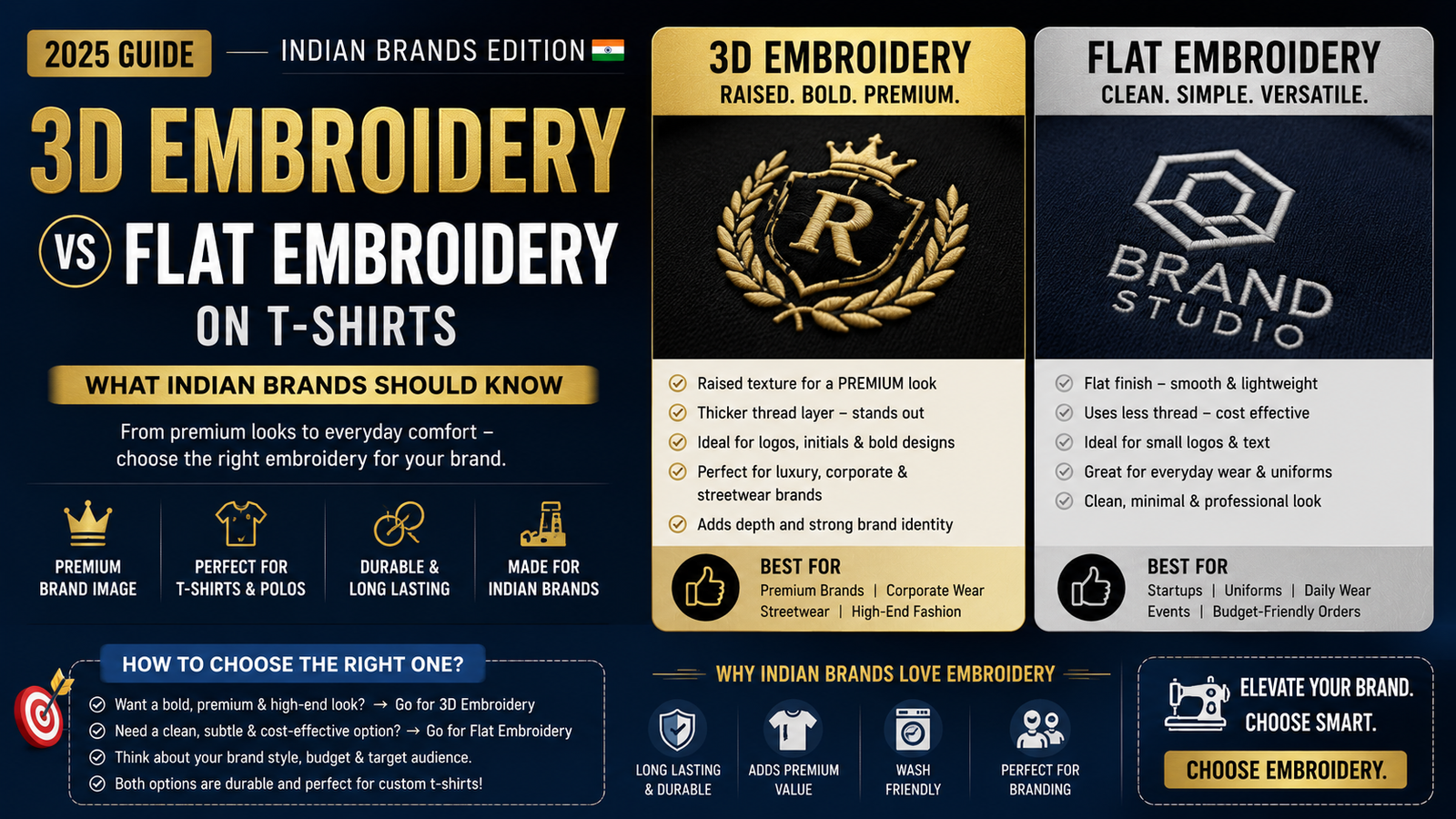
Embroidery has become one of the most popular customization methods for premium t-shirts in India. From corporate uniforms and startup merchandise to fashion brands and promotional apparel, embroidered logos create a professional, durable, and premium appearance.
However, one question many businesses ask before placing an order is:
Should you choose 3D embroidery or flat embroidery?
Although both techniques use high-quality embroidery threads, they produce completely different visual effects, costs, and applications. Selecting the wrong style can affect your brand image, logo readability, production cost, and customer experience.
If you’re searching for 3D embroidery vs flat embroidery tshirt India, this complete guide explains how both techniques work, their advantages and disadvantages, ideal use cases, pricing, durability, and how to choose the right option for your brand in 2025.
What Is Flat Embroidery?
Flat embroidery is the traditional embroidery method used on most custom t-shirts, polo shirts, uniforms, and workwear.
The embroidery stitches are sewn directly onto the fabric surface without additional foam or raised material.
The result is a clean, smooth, and professional finish.
Many businesses ordering <mark>custom embroidered t-shirts India</mark> choose flat embroidery because it is versatile and works well with almost every type of logo.
Features of Flat Embroidery
Flat embroidery offers:
- Smooth stitched finish
- Professional appearance
- Excellent logo detail
- High durability
- Suitable for small logos
- Cost-effective production
It remains the most widely used embroidery style for business apparel.
What Is 3D Embroidery?
3D embroidery—also known as puff embroidery—creates a raised effect by placing a special foam layer beneath the embroidery stitches.
After stitching, the excess foam is removed, leaving the design elevated above the fabric.
This creates a bold, dimensional appearance that stands out visually.
Many premium <mark>fashion brand t-shirts India</mark> use 3D embroidery to create eye-catching logos.
Features of 3D Embroidery
3D embroidery provides:
- Raised logo effect
- Premium appearance
- Strong visual impact
- Luxury branding
- Modern fashion appeal
Because of its structure, it is best suited for simple and bold designs.
Flat Embroidery vs 3D Embroidery: Quick Comparison
| Feature | Flat Embroidery | 3D Embroidery |
|---|---|---|
| Appearance | Smooth | Raised (Puff) |
| Logo Detail | Excellent | Moderate |
| Premium Feel | High | Very High |
| Small Text | Excellent | Not Recommended |
| Cost | Lower | Higher |
| Fashion Appeal | Professional | Bold & Trendy |
| Corporate Uniforms | Excellent | Limited |
| Startup Merchandise | Excellent | Good |
| Streetwear | Good | Excellent |
| Polo Shirts | Excellent | Good |
| T-Shirts | Excellent | Good (Large Logos Only) |
How Flat Embroidery Works
The embroidery machine stitches directly into the fabric.
There is:
- No foam
- No raised surface
- No extra thickness
This allows highly detailed logos, thin lines, and small text to remain sharp and readable.
How 3D Embroidery Works
For 3D embroidery:
- Foam is placed on the fabric.
- The embroidery machine stitches over the foam.
- The excess foam is removed.
- The logo remains raised.
The result creates a premium three-dimensional appearance.
Which Logos Work Best?
Best Logos for Flat Embroidery
Flat embroidery is ideal for:
- Corporate logos
- School logos
- Hotel branding
- Restaurant uniforms
- Healthcare apparel
- Educational institutions
It is especially suitable for logos containing:
- Fine details
- Thin lines
- Small lettering
- Multiple colours
Many <mark>corporate uniform embroidery India</mark> projects rely on flat embroidery for its precision.
Best Logos for 3D Embroidery
3D embroidery works best with:
- Bold typography
- Large initials
- Fashion logos
- Sports branding
- Minimal designs
- Thick outlines
Avoid using:
- Tiny text
- Thin lines
- Highly detailed graphics
These elements may lose clarity due to the raised stitching.
Which Looks More Premium?
Both styles can look premium—but in different ways.
Flat Embroidery
Creates a refined and elegant appearance.
Ideal for:
- Business uniforms
- Executive apparel
- Hospitality
- Schools
3D Embroidery
Creates a bold, luxury streetwear look.
Perfect for:
- Fashion brands
- Creator merchandise
- Sportswear
- Lifestyle brands
Your choice should align with your brand identity.
Which Is More Durable?
Both methods are highly durable when produced using quality polyester embroidery thread.
With proper care:
- Colours remain vibrant
- Stitches stay secure
- Logos maintain their appearance for years
However, flat embroidery generally experiences slightly less wear because it sits flush with the fabric.
Which Is Better for Indian Summers?
Comfort matters, especially in warm climates.
Flat Embroidery
- Lighter
- More breathable
- Less noticeable while wearing
3D Embroidery
- Slightly thicker
- More structured
- Better suited for premium branding than lightweight comfort
For daily corporate uniforms, flat embroidery is usually the preferred option.
Cost Comparison
Several factors influence embroidery pricing:
- Logo size
- Stitch count
- Number of colours
- Fabric type
- Order quantity
Generally:
Flat Embroidery
Lower production cost.
3D Embroidery
Higher pricing due to:
- Foam material
- Additional setup
- Longer production time
Businesses ordering <mark>bulk embroidered t-shirts India</mark> often choose flat embroidery to keep costs manageable.
Best Fabric Choices
Embroidery quality also depends on fabric.
Flat Embroidery
Works well on:
- 180 GSM cotton
- 200 GSM cotton
- 220 GSM biowash cotton
- Polo fabrics
3D Embroidery
Performs best on:
- 220 GSM cotton
- Heavyweight fabrics
- Sweatshirts
- Hoodies
- Caps
Thicker fabrics provide better support for raised embroidery.
Which Industries Prefer Flat Embroidery?
Flat embroidery is widely used by:
- IT companies
- Schools
- Colleges
- Hotels
- Restaurants
- Hospitals
- Manufacturing firms
- Corporate offices
Its professional appearance suits formal environments.
Which Brands Prefer 3D Embroidery?
3D embroidery is popular among:
- Fashion labels
- Streetwear brands
- Creator merchandise
- Sportswear companies
- Motorcycle clubs
- Lifestyle brands
The raised effect helps products stand out in competitive retail markets.
Common Mistakes to Avoid
Choosing 3D for Detailed Logos
Small text may become difficult to read.
Using Flat Embroidery for Fashion Statements
Some premium streetwear designs benefit more from a bold raised finish.
Ignoring Fabric GSM
Lightweight fabrics may not support heavy embroidery as effectively as thicker materials.
Selecting the Cheapest Option
Quality digitization and embroidery matter more than saving a few rupees.
Skipping Sample Approval
Always review an embroidered sample before approving bulk production.
Avoiding these mistakes improves the final appearance of your <mark>custom logo t-shirts India</mark>.
Future Trends in Embroidered Apparel
The Indian custom apparel industry is seeing increased demand for:
- Mixed embroidery techniques
- Puff embroidery accents
- Minimalist logo embroidery
- Sustainable cotton fabrics
- Premium heavyweight t-shirts
- Luxury streetwear collections
Brands are increasingly combining embroidery with high-quality fabrics to create premium merchandise.
Frequently Asked Questions (FAQs)
Is 3D embroidery more expensive than flat embroidery?
Yes. It generally costs more because it requires foam material, additional machine setup, and longer production time.
Can every logo be converted to 3D embroidery?
No. Logos with fine details, thin lines, or small text are better suited for flat embroidery.
Which embroidery is better for corporate uniforms?
Flat embroidery is the preferred choice because it delivers a clean, professional, and highly readable logo.
Is 3D embroidery durable?
Yes. When produced with quality materials and proper digitization, 3D embroidery is highly durable and maintains its raised appearance through regular wear and washing.
Which fabric works best for 3D embroidery?
220 GSM cotton, heavyweight t-shirts, hoodies, and structured fabrics provide the best support for raised embroidery.
Final Verdict: 3D Embroidery vs Flat Embroidery TShirt India
When comparing 3D embroidery vs flat embroidery tshirt India, there is no single “best” option—only the right choice for your brand and application.
Flat embroidery remains the top choice for corporate uniforms, schools, hospitality businesses, startups, and organizations that require clean, detailed, and professional logos. It is more versatile, cost-effective, and suitable for intricate designs with small text or fine lines.
3D embroidery, on the other hand, is ideal for fashion brands, streetwear labels, sportswear, and premium merchandise that aim to make a bold visual statement. Its raised, textured finish adds depth and luxury but works best with simple, bold logos on thicker fabrics.
For most businesses in India, flat embroidery offers the best balance of durability, affordability, and brand professionalism. If your goal is to create eye-catching fashion apparel or limited-edition merchandise, 3D embroidery can provide the distinctive premium look that helps your products stand out in an increasingly competitive market.
Leave a Reply