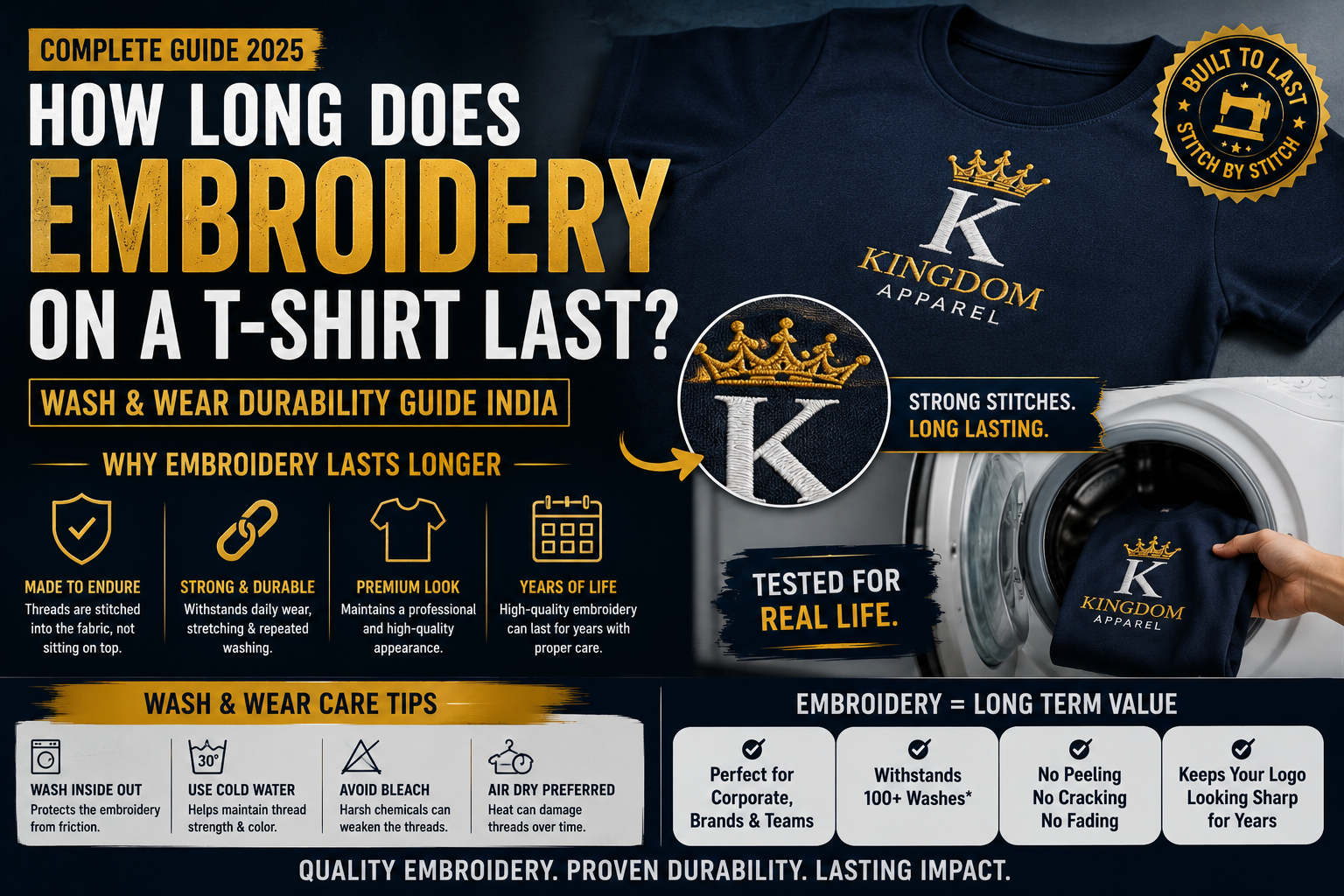
One of the biggest reasons businesses, startups, schools, hotels, restaurants, sports teams, and D2C brands choose custom embroidered t-shirts is their exceptional durability. Unlike many printing methods that may fade, crack, or peel over time, embroidery is stitched directly into the fabric, making it one of the longest-lasting customization techniques available.
However, a common question remains:
How long does embroidery on a t-shirt actually last?
The answer depends on several factors, including the quality of the embroidery thread, fabric GSM, digitization, stitching technique, washing habits, drying methods, and overall garment care. A well-made embroidered t-shirt can retain its professional appearance for many years, even with regular use, provided it is properly maintained.
If you’re searching for how long embroidery tshirt last India, this complete guide explains the expected lifespan of embroidered logos, what affects their durability, common mistakes that shorten garment life, and practical care tips to keep your embroidered t-shirts looking new in 2025.
How Long Does Embroidery Last?
High-quality embroidery is designed to last for the entire usable life of the t-shirt.
Unlike surface printing, embroidery becomes an integral part of the garment through tightly stitched threads. In most cases, the fabric will wear out before the embroidery itself.
With proper care, an embroidered logo can typically withstand hundreds of wash cycles while maintaining its colour, shape, and definition. The exact lifespan depends on garment quality and maintenance rather than a fixed number of years.
Why Embroidery Lasts Longer Than Printing
Embroidery offers superior durability because:
- The logo is stitched into the fabric rather than applied on top.
- High-quality polyester embroidery thread resists fading.
- The design does not crack or peel like some printed graphics.
- Thread maintains its texture even after repeated washing.
Many businesses investing in <mark>custom embroidered t-shirts India</mark> choose embroidery specifically because it provides a long-lasting, premium finish for uniforms and branded apparel.
Factors That Affect Embroidery Lifespan
1. Fabric Quality
The durability of the garment is just as important as the embroidery.
Recommended fabrics include:
- 180 GSM Biowash Cotton
- 200 GSM Cotton
- 220 GSM Cotton
- Premium cotton blends
A high-quality fabric helps the embroidery remain stable and prevents premature wear.
2. Embroidery Thread Quality
Professional embroidery generally uses polyester thread because it offers:
- Excellent colour retention
- High strength
- Resistance to fading
- Superior wash durability
Rayon thread provides a glossy finish but may require more careful maintenance in demanding environments.
3. Digitization Quality
Digitization converts your logo into machine embroidery instructions.
Poor digitization can lead to:
- Loose stitches
- Uneven logos
- Thread breakage
- Distorted designs
Professional digitization ensures the embroidery remains attractive over time.
4. Stitch Density
A balanced stitch density is essential.
Too Low
- Sparse appearance
- Reduced coverage
Too High
- Stiff embroidery
- Increased stress on the fabric
Experienced embroidery providers optimize stitch density for both durability and comfort.
How Washing Affects Embroidery
Proper washing has a significant impact on garment life.
Best Practices
- Wash inside out.
- Use cold or lukewarm water.
- Select a gentle wash cycle.
- Use mild detergent.
- Wash with similar colours.
These simple habits help protect both the embroidery and the fabric.
Common Washing Mistakes
Avoid:
- Hot water washing
- Harsh bleach
- Strong chemical detergents
- Aggressive scrubbing over the logo
- Overloading the washing machine
- Frequent industrial washing unless the garment is designed for it
Improper washing is one of the most common reasons garments lose their appearance prematurely.
Drying Tips
The way a t-shirt is dried also influences longevity.
Recommended
- Air dry in the shade.
- Lay flat or hang naturally.
- Avoid excessive heat.
Avoid
- High-temperature tumble drying
- Direct prolonged sunlight
- Placing heavy objects on damp embroidery
Excessive heat can affect both the fabric and the thread over time.
Ironing Embroidered T-Shirts
Embroidery should not be ironed directly.
Instead:
- Turn the t-shirt inside out.
- Use a low heat setting.
- Place a thin cotton cloth over the embroidery if ironing from the front is necessary.
- Avoid steam directly on raised embroidery for extended periods.
These precautions help preserve the thread’s appearance.
Does Embroidery Shrink?
The embroidery itself does not shrink.
However, the surrounding fabric may shrink if:
- The cotton has not been pre-shrunk.
- The garment is washed in hot water.
- High heat drying is used.
Choosing quality pre-shrunk fabrics minimizes this risk.
Best GSM for Long-Lasting Embroidery
Fabric weight plays an important role in durability.
| GSM | Durability |
|---|---|
| 160 GSM | Good |
| 180 GSM | Excellent |
| 220 GSM | Excellent |
| 240 GSM | Outstanding |
Many businesses searching for <mark>best GSM cotton tshirt India custom</mark> choose 180–220 GSM cotton because it offers the ideal combination of comfort, structure, and embroidery performance.
How Long Do Corporate Uniforms Last?
The lifespan of corporate uniforms depends on wear frequency and care.
Generally:
- Daily office uniforms maintained properly can remain presentable for years.
- Hospitality uniforms may require more frequent replacement due to intensive use.
- Event apparel worn occasionally often lasts much longer.
Regular inspection and proper laundering help extend garment life.
Embroidery vs Printing Durability
| Feature | Printing | Embroidery |
|---|---|---|
| Fade Resistance | Good | Excellent |
| Crack Resistance | Depends on Method | Excellent |
| Peel Resistance | Varies | Excellent |
| Wash Performance | Good | Excellent |
| Long-Term Appearance | Good | Excellent |
For businesses seeking long-term branding, embroidery generally provides superior durability.
Industries That Benefit Most
Long-lasting embroidered t-shirts are especially valuable for:
- IT companies
- Hotels
- Restaurants
- Retail chains
- Healthcare providers
- Schools
- Colleges
- Manufacturing businesses
- Logistics companies
- Startups
Organizations that rely on daily uniforms often choose embroidery for its professional appearance and longevity.
Signs of High-Quality Embroidery
Look for:
- Smooth stitching
- Even thread tension
- Clean edges
- No loose threads
- Balanced stitch density
- Accurate logo proportions
- Strong backing support
These characteristics indicate professional workmanship.
Common Mistakes That Reduce Lifespan
Avoid these common issues:
- Buying low-quality cotton.
- Choosing inexperienced embroidery providers.
- Washing in hot water.
- Using bleach.
- Drying on high heat.
- Ironing directly over embroidery.
- Ignoring care instructions.
Most embroidery failures are caused by poor garment care or low-quality production rather than embroidery itself.
Trends in Durable Embroidered Apparel for 2025
Current trends include:
- Premium polyester embroidery thread
- Heavyweight cotton fabrics
- Organic cotton garments
- Minimalist logo embroidery
- Tone-on-tone branding
- Personalized employee uniforms
- Sustainable production
- Long-life corporate apparel
Businesses increasingly view embroidered uniforms as long-term branding investments rather than disposable clothing.
Tips to Make Embroidery Last Longer
Follow these simple practices:
- Choose high-quality cotton (180–220 GSM).
- Use a reputable embroidery provider.
- Wash garments inside out.
- Use mild detergent.
- Avoid bleach and harsh chemicals.
- Air dry whenever possible.
- Store garments folded or on suitable hangers.
- Rotate uniforms if worn daily.
Consistent care helps preserve both the embroidery and the garment.
Frequently Asked Questions (FAQs)
How long does embroidery on a t-shirt last?
High-quality embroidery can last for the entire lifespan of the t-shirt. In many cases, the fabric wears out before the embroidered logo shows significant signs of deterioration.
Does embroidery fade after washing?
Quality polyester embroidery thread is highly resistant to fading. Washing with mild detergent and avoiding excessive heat helps maintain colour over time.
Can embroidery peel or crack?
No. Because embroidery is stitched into the fabric rather than applied to its surface, it does not peel or crack like some printed designs.
Which fabric is best for long-lasting embroidery?
180 GSM and 220 GSM cotton are among the best choices, providing excellent support for embroidery while remaining comfortable and durable.
Is embroidery better than printing for uniforms?
For long-term corporate uniforms and professional branding, embroidery is often the preferred option due to its durability, premium appearance, and excellent wash performance.
Final Verdict: How Long Embroidery TShirt Last India
If you’re wondering how long embroidery tshirt last India, the answer is reassuring: high-quality embroidery is built to last for the life of the garment. Unlike many printing techniques, embroidered logos are stitched directly into the fabric, allowing them to maintain their shape, colour, and professional appearance through frequent wear and repeated washing.
To maximize longevity, choose 180–220 GSM premium cotton, insist on professional digitization, and ensure the embroidery is produced with high-quality polyester thread. Combine these choices with proper care—such as washing inside out, using mild detergents, avoiding high heat, and air drying whenever possible—and your embroidered t-shirts can remain attractive and functional for years.
For businesses, startups, schools, hospitality brands, and organizations across India, custom embroidered t-shirts are more than just uniforms—they are a durable branding investment that delivers lasting value, reinforces professionalism, and keeps your logo looking its best over the long term.
Leave a Reply