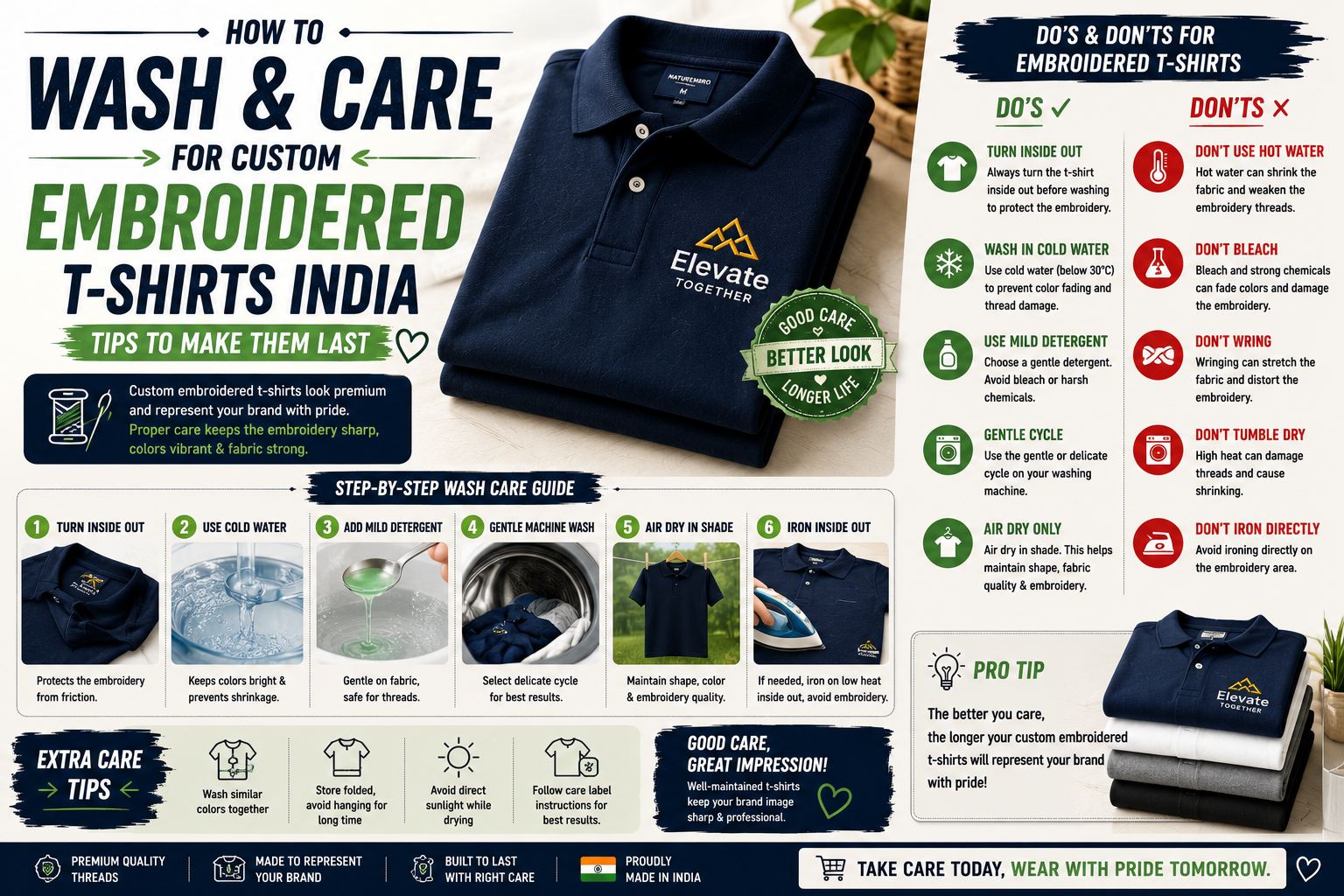
A custom embroidered T-shirt is more than just clothing—it’s an investment in your brand, team, or personal style. Whether you’ve ordered embroidered uniforms for your employees, branded merchandise for your startup, or personalized T-shirts for a special event, proper care can significantly extend the life of both the fabric and the embroidery.
Unlike printed designs, embroidery is stitched directly into the garment using durable threads. While embroidery itself is highly resistant to fading and peeling, the surrounding fabric still requires proper washing and maintenance.
If you’ve been searching for how to wash embroidered tshirt India care, this comprehensive guide explains the best washing methods, drying techniques, ironing tips, stain removal practices, and common mistakes to avoid so your embroidered T-shirts stay looking new for years.
Quick Answer
To properly wash a custom embroidered T-shirt in India, turn it inside out, wash it in cold or lukewarm water using a mild detergent, select a gentle wash cycle, avoid chlorine bleach, air dry whenever possible, and iron the garment inside out. Following these simple care steps helps preserve both the embroidery and the fabric for years.
Why Proper Care Matters
Embroidery is one of the most durable apparel customization methods available. High-quality polyester embroidery thread is designed to withstand repeated washing and everyday wear.
However, improper care can lead to:
- Fabric fading
- Shrinkage
- Loose threads
- Distorted embroidery
- Reduced garment lifespan
Fortunately, these problems are largely preventable with proper maintenance.
Understanding Embroidery vs. Printing
Unlike printed graphics that sit on the surface of the fabric, embroidery is stitched into the garment.
This gives embroidered T-shirts:
- Better durability
- Premium appearance
- Superior resistance to cracking
- Excellent wash performance
- Longer lifespan
In many cases, the embroidery will outlast the T-shirt itself.
Step 1: Read the Care Label First
Before washing any embroidered garment, always check the manufacturer’s care label.
The label may provide guidance on:
- Water temperature
- Drying method
- Ironing instructions
- Fabric composition
- Bleach restrictions
Following these instructions helps maintain warranty and garment quality.
Step 2: Turn the T-Shirt Inside Out
This is one of the easiest ways to protect embroidery.
Turning the garment inside out:
- Reduces friction
- Protects stitches
- Minimizes color fading
- Helps preserve fabric quality
Make this a habit before every wash.
Step 3: Wash with Cold or Lukewarm Water
High temperatures can gradually affect cotton fibers and contribute to shrinkage.
For most embroidered cotton T-shirts:
✔ Cold water (20–30°C) is ideal.
✔ Lukewarm water is acceptable for heavily soiled garments.
Avoid consistently washing in very hot water unless recommended on the care label.
Step 4: Use a Mild Detergent
Choose a gentle detergent that cleans effectively without being overly harsh.
Avoid products containing excessive bleach or strong chemicals unless they are specifically intended for the garment’s fabric.
A mild detergent helps preserve:
- Fabric softness
- Thread color
- Overall garment condition
Step 5: Choose a Gentle Wash Cycle
A gentle or delicate cycle reduces:
- Excessive agitation
- Stitch friction
- Fabric stretching
If washing by hand, gently move the garment through the water without scrubbing the embroidered area aggressively.
Step 6: Wash Similar Colors Together
To prevent color transfer:
- Wash whites separately.
- Group dark colors together.
- Separate bright reds and deep blues during the first few washes.
Color bleeding is more likely from the fabric than from quality embroidery thread.
Step 7: Avoid Overloading the Washing Machine
Packing too many clothes into one load increases friction.
This can cause:
- Fabric wear
- Wrinkles
- Unnecessary stress on embroidered areas
Leave enough space for garments to move freely.
Hand Washing vs. Machine Washing
Hand Washing
Ideal for:
- Luxury embroidered garments
- Delicate fabrics
- Heavily embroidered designs
Benefits include:
- Less mechanical friction
- Better control
- Reduced stretching
Machine Washing
Modern embroidered T-shirts are generally safe for machine washing when:
- Turned inside out
- Washed on a gentle cycle
- Cleaned with mild detergent
- Washed in cool water
Most high-quality embroidered apparel is designed for regular machine washing.
Can You Use Bleach?
Chlorine bleach is generally not recommended for embroidered garments.
Bleach may:
- Weaken cotton fibers
- Affect fabric color
- Reduce garment lifespan
If stain removal is necessary, use a fabric-safe stain remover according to the product instructions.
The Best Way to Dry Embroidered T-Shirts
Drying methods have a significant impact on garment longevity.
Air Drying (Recommended)
Benefits include:
- Less shrinkage
- Better shape retention
- Reduced fabric stress
- Longer lifespan
Hang the T-shirt in a shaded, well-ventilated area.
Tumble Drying
If using a dryer:
- Select a low-heat setting.
- Remove the garment promptly after drying.
Repeated high-heat drying can shorten the life of cotton fabrics.
Avoid Direct Sunlight for Long Periods
While occasional sunlight is fine, prolonged exposure may gradually fade some fabrics.
Drying in the shade helps preserve:
- Fabric color
- Thread appearance
- Cotton strength
How to Iron an Embroidered T-Shirt
Never place a hot iron directly on the embroidered design.
Instead:
- Turn the garment inside out.
- Iron from the reverse side.
- Use the heat setting appropriate for the fabric.
- If needed, place a pressing cloth between the iron and the fabric.
This helps protect both the embroidery and the garment.
How to Remove Stains Safely
Treat stains as soon as possible.
General tips:
- Blot rather than rub.
- Use a mild stain remover suitable for the fabric.
- Test cleaning products on an inconspicuous area first.
- Avoid scrubbing directly over embroidery.
For persistent stains, follow the garment care instructions or seek professional cleaning advice.
How to Store Embroidered T-Shirts
Proper storage extends garment life.
Best practices include:
- Folding neatly or hanging on sturdy hangers.
- Keeping garments clean before storage.
- Storing in a cool, dry place.
- Avoiding damp environments that may encourage mildew.
Proper storage helps preserve both the fabric and embroidered logo.
Common Mistakes That Damage Embroidered T-Shirts
Avoid these common errors:
❌ Washing in very hot water.
❌ Using chlorine bleach.
❌ Ironing directly on embroidery.
❌ Drying repeatedly on high heat.
❌ Pulling loose threads instead of trimming them carefully.
❌ Storing garments while damp.
❌ Scrubbing embroidered areas aggressively.
Small changes in care can significantly extend the life of your T-shirt.
How Long Should an Embroidered T-Shirt Last?
With proper care:
| Usage | Expected Lifespan |
|---|---|
| Occasional Wear | 7–10+ Years |
| Weekly Wear | 5–8 Years |
| Daily Uniform | 2–5 Years |
| Event Apparel | Many Years if Stored Properly |
In many cases, the embroidery remains intact even after the fabric begins to show normal wear.
Why Businesses Prefer Embroidered Uniforms
Custom embroidered apparel is widely used across industries because it offers:
- Professional appearance
- Excellent durability
- Long-lasting branding
- Better resistance to repeated washing
- Premium customer perception
This makes embroidery a popular choice for corporate uniforms, hospitality, healthcare, retail, education, and sports organizations.
Frequently Asked Questions (FAQ)
How do you wash an embroidered T-shirt?
Turn it inside out, wash it in cold or lukewarm water using a mild detergent, choose a gentle cycle, and avoid chlorine bleach.
Can embroidered T-shirts go in the washing machine?
Yes. High-quality embroidered garments are generally safe for machine washing when proper care instructions are followed.
Should embroidered T-shirts be air dried?
Yes. Air drying is the preferred method because it reduces shrinkage and helps maintain fabric quality.
Can I iron directly on embroidery?
No. Always iron the garment inside out or use a pressing cloth to protect the embroidered design.
Does embroidery fade after washing?
Quality embroidery thread is highly resistant to fading, although the surrounding fabric may gradually lose color over time with heavy use and repeated washing.
How long does embroidery last?
Professionally embroidered designs can remain in excellent condition for 5–10 years or longer, depending on garment quality and care.
Final Thoughts
Learning how to wash embroidered tshirt India care correctly is one of the easiest ways to protect your investment in custom apparel. Whether you’re caring for a single personalized T-shirt or hundreds of branded employee uniforms, simple habits—such as washing in cool water, using a mild detergent, air drying, and ironing inside out—can dramatically increase the life of both the fabric and the embroidery.
A high-quality embroidered logo is designed to withstand years of regular use. With the right maintenance, your custom T-shirts can continue looking professional, comfortable, and vibrant long after many printed alternatives begin to fade or crack.
Leave a Reply